
Black Mould at the Ceiling and Wall Junction: What It Really Means
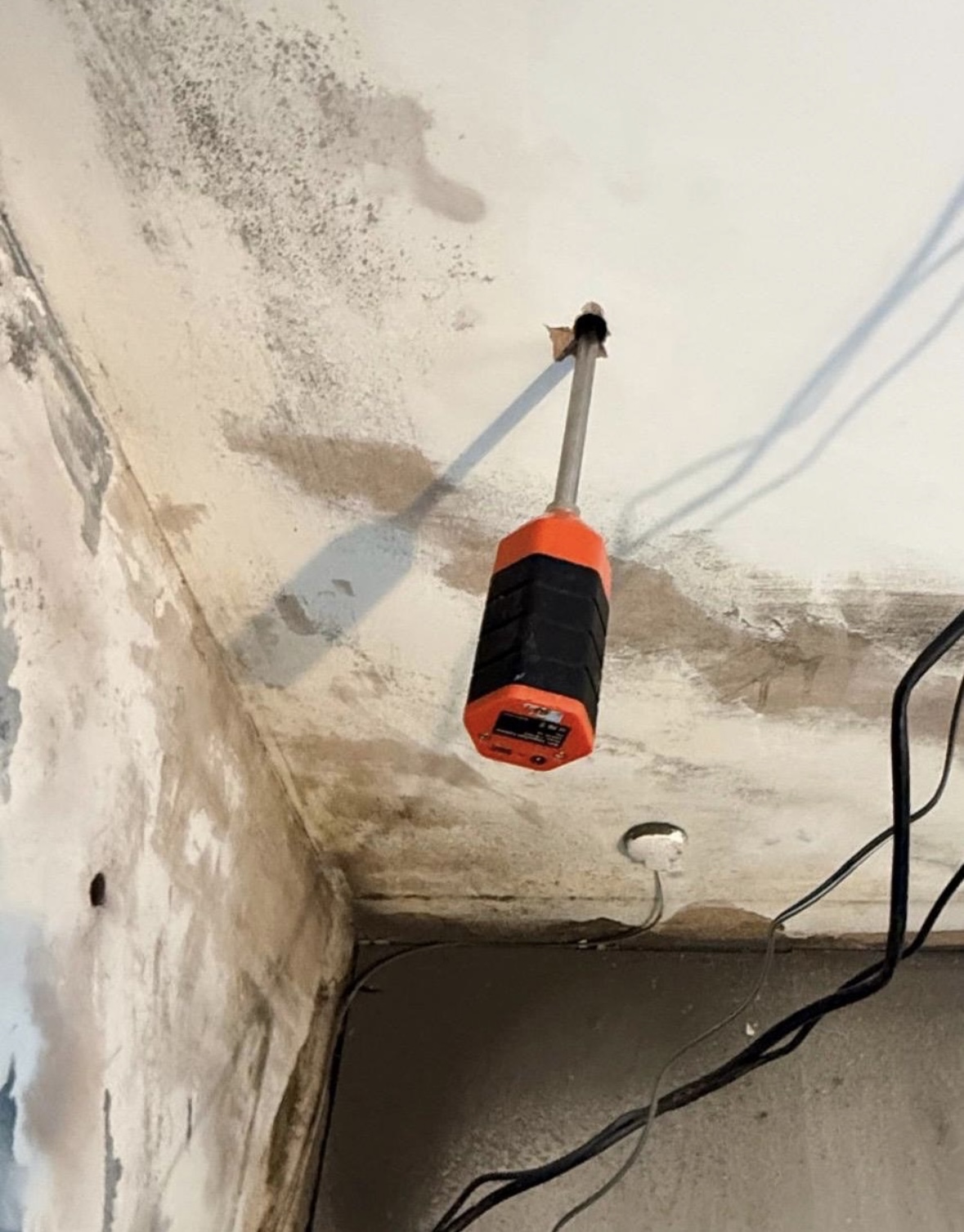
During a recent inspection we recorded extensive black mould growth spreading across the ceiling-to-wall junction of a habitable room, together with visible salting, blistered paint and softened plaster. The damp meter reading in the affected zone confirmed elevated moisture across a wide area - not a single localised patch.
Why mould concentrates at the ceiling and wall junction
This is one of the most common places for mould to appear because it is almost always the coldest surface in the room. Where the external wall meets the ceiling there is often reduced insulation cover, a thermal bridge across the wall plate, and very little air movement. Warm, moist internal air rises, hits that cold strip, cools rapidly, and releases its moisture onto the surface. Once the surface stays damp for long enough, mould spores germinate and colonise.
What the evidence suggested here
The pattern of mould followed the cold line of the junction almost perfectly, which points strongly to interstitial condensation rather than a roof leak or penetrating damp. The plaster staining and salt deposits also indicate that this has been happening repeatedly over multiple heating seasons, not just one bad winter.
We inspected the loft above, checked insulation depth and coverage at the eaves, looked for gaps around the wall plate, and assessed the room's ventilation strategy - trickle vents, extractor performance and typical occupancy behaviour.
Our recommendations
Treat the mould safely with a fungicidal wash rather than painting over it. Address the cold spot by improving insulation continuity at the eaves and wall plate. Improve background ventilation so moisture-laden air is removed before it settles on cold surfaces - this may mean a PIV unit, upgraded extractor fans or better use of existing trickle vents. Finally, redecorate with a breathable, mould-resistant finish once surfaces are dry.
If you're seeing the same thing
Cleaning alone will not stop mould returning if the underlying cold-surface and ventilation issues remain. If you have persistent black mould along ceilings, corners or window reveals, book a mould inspection so the root cause can be identified and dealt with properly.